SECTION 1: Reading Correspondence - Healthy Smiles Referral Program
11:00
Hi Julianne,
We wanted to take a moment to thank you for being such a loyal patient over the last five years. We always enjoy seeing you in the clinic,
and we truly appreciate the trust you place in our team to take care of your oral health.
We've noticed that many of our best new patients come to us through word-of-mouth recommendations from people like you. Because of this, we
are officially launching our "Healthy Smiles Referral Program," and we'd love for you to be a part of it!
How it works:
The next time you're chatting with a friend, family member, or colleague who is looking for a new dentist, simply give them one of our
"Referral Cards" (available at the front desk) or have them mention your name when they book their first appointment.
As a token of our appreciation, for every person you refer who completes a new patient exam and cleaning:
1. You receive: A $50 credit toward any future treatment or professional whitening service.
2. They receive: A "Welcome Package" that includes a high-end electric toothbrush and a complimentary panoramic X-ray (a $150 value).
There's no limit to how many credits you can earn! If you refer four friends, your next major cleaning or filling could be entirely covered.
We believe that a referral is the highest compliment we can receive, and we want to make sure you feel rewarded for
sharing your positive experience.
On your next visit, keep an eye out for our new "Patient Appreciation Wall" in the lobby—we'll be featuring some of our top referrers and
sharing some fun dental health tips. Speaking of your next visit, you're currently scheduled for your six-month check-up on Tuesday, November 12,
at 10:30 AM. If you need to reschedule, please let us know at least 24 hours in advance.
Keep smiling!
Best,
Dr. Aris and the Team at Bright Smile Dental
SECTION 2
09:00
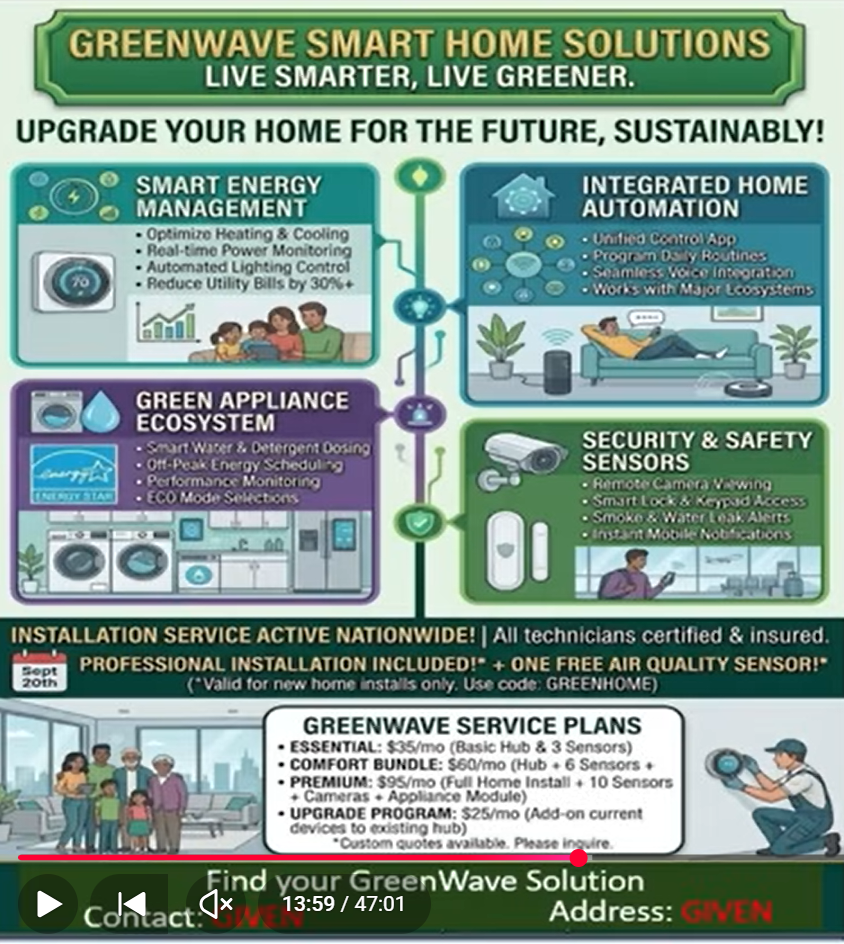
Greenwave Smart Home Solutions Live Smarter, Live Greener
Part 1: Read the following email with th attached diagram. Answer the questions by choosing the best word
or phrase to complete the
sentence, referring to the diagram when necessary.
SECTION 3: Reading for Information
10:00
Repair Culture
A.
"Repair Culture," also known as the Right to Repair movement, is a socio-political response to the modern industry
practice of "planned obsolescence." Many consumer electronics are intentionally designed to be difficult to fix,
with glued-in batteries and proprietary screws. This forces consumers to discard semi-functional devices and buy
new ones, fueling a global e-waste crisis. Repair advocates argue that true ownership of a product includes the right
to open it, understand it, and mend it. This movement is not just about saving money; it's about reclaiming autonomy
from large corporations.
B.
"Repair Cafes" have emerged as the heart of this movement. These are free community meeting spaces where people bring
broken household items ‐ toasters, bicycles, clothing ‐ and fix them alongside volunteer experts. These
events foster "intergenerational knowledge transfer," as older generations share mechanical skills that have been
lost in the digital age. Research shows that participating in repair activities increases a person's "self-efficacy"
‐ the belief in one's ability to influence the physical world. It transforms a passive consumer into an active
"maker."
C.
Legally, the movement is making significant strides in the European Union and parts of North America. New laws are
being drafted that require manufacturers to provide spare parts and repair manuals to independent shops and the
general public for at least ten years after a product is released. Tech companies have lobbied against these laws,
citing concerns over "intellectual property" and "consumer safety." However, supporters point out that these
arguments are often a facade for protecting profit margins and preventing the growth of a secondary market
for used goods.
D.
Environmentally, the "repair first" mindset is the most effective way to reduce the carbon footprint of the tech
sector. The majority of a smartphone's emissions are generated during the manufacturing and shipping phases, not
during its actual use. Extending the life of a phone from two years to four years would nearly halve its total
environmental impact. As the global economy faces resource scarcity, "maintenance" is becoming a more radical and
necessary act than "innovation." The future may belong not to those who can build the newest thing, but to those
who can keep the old things running.
E. Not given in any of the above paragraphs.
SECTION 4: Reading for Viewpoints: The Great Wealth Transfer
13:00
Over the next two decades, trillions of dollars are expected to pass from the "Baby Boomer" generation to their
millennial and Gen Z heirs. Economists have dubbed this "The Great Wealth Transfer." While this windfall promises
to provide a financial lifeline to a generation struggling with student debt and housing costs, it also threatens
to permanently solidify social stratification. The debate over inheritance taxes and "merit" has become a central
flashpoint in the discussion of economic justice.
From one perspective, the right to pass down wealth is a fundamental component of the "American Dream" and family
autonomy. Proponents of minimal inheritance taxes argue that individuals work hard and save specifically to provide
a better life for their children. To tax this wealth heavily at the time of death is seen by many as "double taxation"
‐ the money was already taxed when it was earned. Furthermore, they argue that inherited wealth provides the
stability necessary for the next generation to take entrepreneurial risks, pursue higher education, and contribute
to the economy without the crushing weight of poverty. In this view, family wealth is a private safety net that reduces
the burden on the state.
However, social critics argue that the sheer scale of this transfer is fundamentally anti-meritocratic. If the
primary predictor of a person's financial success is the zip code they were born in or the size of their parents'
bank account, the idea of a "level playing field" becomes a myth. This concentration of wealth creates a "landed gentry"
class that has access to elite networks, better healthcare, and debt-free education, while those without such safety
nets fall further behind. Critics advocate for a robust "Estate Tax" or "Inheritance Tax," suggesting that these funds
should be redistributed to fund public education and infrastructure, thereby "recycling" wealth to create
opportunities for everyone, not just a lucky few.
Economists also point to the "velocity of money" problem. Inherited wealth is often tied up in real estate or
long-term investments, where it sits dormant. If that same wealth were distributed more broadly through social
programs or higher wages, it would likely be spent on goods and services, stimulating broader economic growth.
Questions: Section 1
- Part 1
Location: Vadodara, Gujarat
Renuka Nair, a former banker is the founder of Panache IELTS. She was born and raised in Mumbai and did
her schooling
from Apostolic Carmel Convent, a school that believed in holistic education. Despite Malayalam being her
mother tongue,
English was her first language of education. The nuances of grammar were inculcated in her during her
formative years,
along with creative writing. It was while she was pursuing her Bachelor's degree that she decided to
hone her vocabulary.
Having completed her Masters in Mathematics and Computer Science, she started her career in Vadodara,
Gujarat in NIIT,
teaching C++ to Engineering students. This was followed by 15 years in the Banking Industry, during the
course of which
she obtained a PG diploma in Finance. Wanting to start out on her own, she quit banking in 2012 and
started training
professionals initially in Corporate Communications, followed by Spoken English and eventually IELTS,
CELPIP, TOEFL, GMAT, and
so on.
Our tutor takes pains to explain the IELTS/TOEFL/CAT/GMAT Reading task to students and we ensure
weak students understand this
task and are comfortable with it before conducting mock tests.
A Variety of Listening Tests
We have a repertoire of Listening Tests that cover all sections from long MCQs to Maps, and
confusing Fill-ups in IELTS, and other
English profeciency exams.
Speaking
We conduct one-on-one speaking sessions daily with our students, as a result of which even
vernacular students get
their desired bands.
Writing
We encourage our students to practice writing daily. Their writing is thoroghly checked and errors
are pointed out.
We also suggest unique vocabulary to ensure our students stand out.